Free Name Tracing Worksheets
Type a name and make printable name tracing worksheets in seconds. Every sheet starts with a solid model row, then dotted rows to trace, letter boxes to build the name one letter at a time, and blank lines for writing it alone. No sign-up, no download, and free for home and classroom use.
Make your worksheet
Try one:
Trace the dotted letters, then try the blank lines on your own. Short practice every day beats one long session.
How to make name tracing worksheets
- Type the name exactly as the child should write it. A first name on its own is best for beginners. Add the last name later, once the first name feels easy.
- Pick the letter case. Title case, with a capital first letter and lowercase letters after it, is how a name is really written, so it builds the right habit early. All uppercase is a good first step for very young writers.
- Print the sheet. Press Print worksheet and use your browser print dialog. Choose Save as PDF if you want a digital copy, or print on plain paper for pencil and crayon work. Laminate a printed sheet and it can be reused with a dry-erase marker.
What is on every sheet
- A solid model row at the top, so the child can see the name clearly before tracing anything.
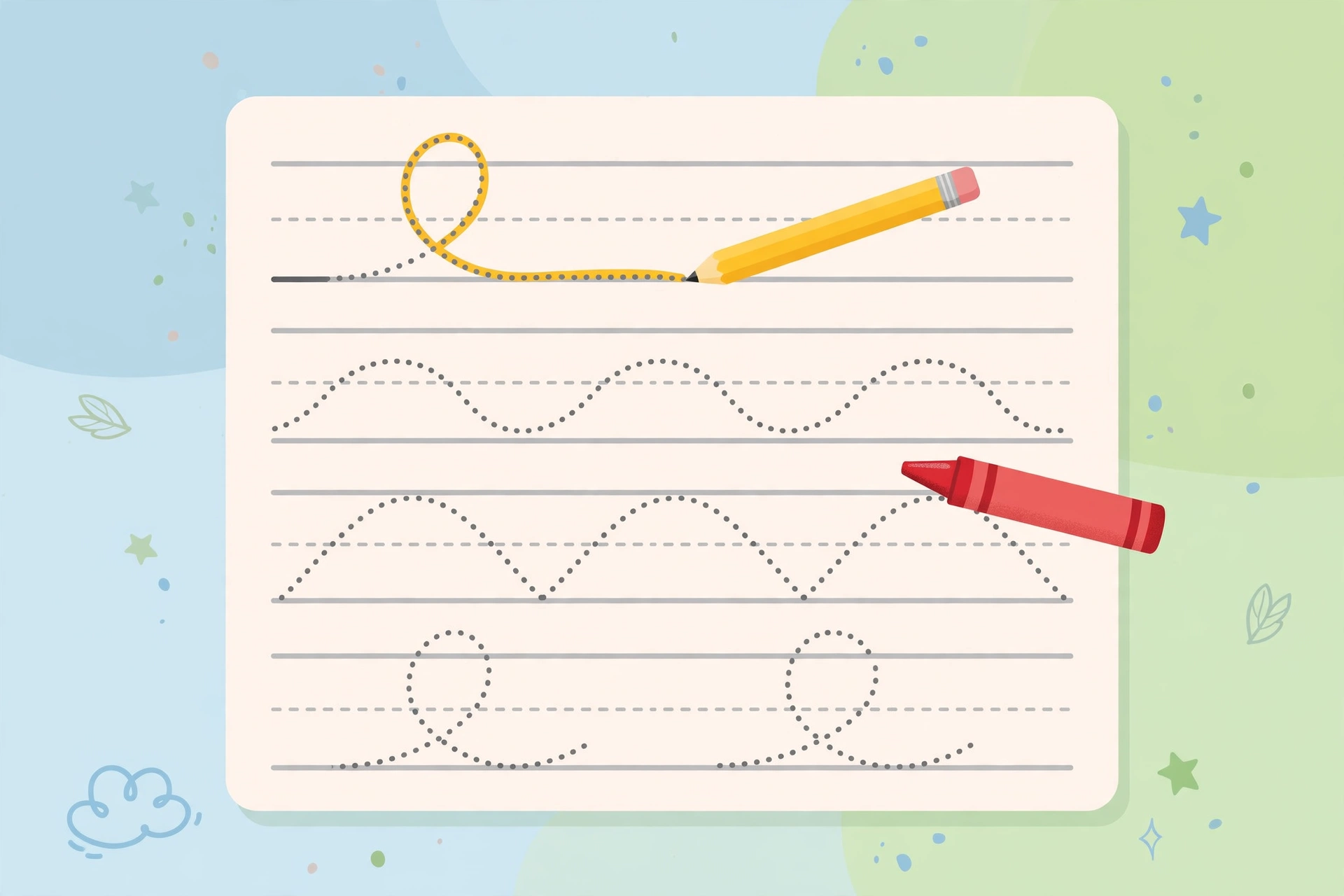
- Dotted tracing rows in large print letters on primary handwriting lines, with a dashed middle line that shows where small lowercase letters should reach and where tall letters should go.
- A letter-boxes row with one box per letter, so the child practices the order of the letters, not just their shapes. Tracing alone can hide a child who spells the name in the wrong order.
- Blank writing rows at the bottom, for writing the name without a guide while the model is still fresh.
Tips for teaching name writing
- Start with tracing, then move to the blank lines on the same sheet. Do not rush to the blank lines before the shapes feel familiar.
- Let the child trace with a finger first, then with a thick crayon or pencil. A confident grip matters more than a perfect letter.
- Keep sessions short, around five minutes, and repeat often. Short daily practice builds muscle memory far better than one long weekly drill.
- If a name is long, practice the first name only until it is confident, then make a second sheet with the full name.
- Praise the effort and the letters that came out right. Early writing is about control and confidence, not perfection.
Who these worksheets are for
Preschool and pre-K teachers making one sheet per child, kindergarten teachers running a handwriting center, homeschool families practicing at the kitchen table, and occupational therapists working on fine-motor control and pencil control with large guided letters. The same sheet works for a first name, a full name, or any short word a child is learning, such as a sight word. Teachers often keep a set of name tracing worksheets in a writing center so every child practices their own name.
Frequently asked questions
What age are name tracing worksheets for?
Name tracing worksheets are made for early writers, roughly ages 3 to 6, in preschool, pre-K, and kindergarten. Younger children usually start with all uppercase letters and a first name only. Older children move to title case and a full name.
Should I start with uppercase or lowercase letters?
Either works, but title case is the best default because it matches how the name is actually written. All uppercase is easier for a first attempt, since capital letters are made of simpler straight lines and curves. Lowercase only is best saved for a child who already knows the capital form.
How many tracing rows should a sheet have?
Three tracing rows is a good default: enough repetition to learn the shapes, short enough to finish in one sitting. Use one row for a quick warm-up, or five rows for a child who wants more guided practice before trying the blank lines.
Can I print the worksheet as a PDF?
Yes. These name tracing worksheets print as a single clean page: press Print worksheet, then choose Save as PDF in your browser print dialog. The printed page contains only the worksheet itself, with no buttons or page menus on it.
Is this really free, and can teachers print one per student?
Yes. There is no sign-up and no limit. Make one sheet per child, print as many copies as you need for home or classroom use, and come back for a fresh sheet whenever a child is ready for smaller letters or a longer name.
Further reading
For more ideas on supporting early writing at home, see Reading Rockets’ guide to developing writing and spelling in pre-K — a good companion to these name tracing worksheets.
More free calculators and tools
After name practice, try the other free tools on ToolNestCalc, including salary and tax calculators, gratuity calculators, and visa eligibility checkers.
This worksheet maker runs entirely in your browser. Nothing you type is uploaded or stored.